
Progress you can see, not progress you are told about
Fabrication reported by piece and by weight, out of the shop's own records, so a program running in three countries reads as one picture rather than four spreadsheets.
What is reported, and where it comes from
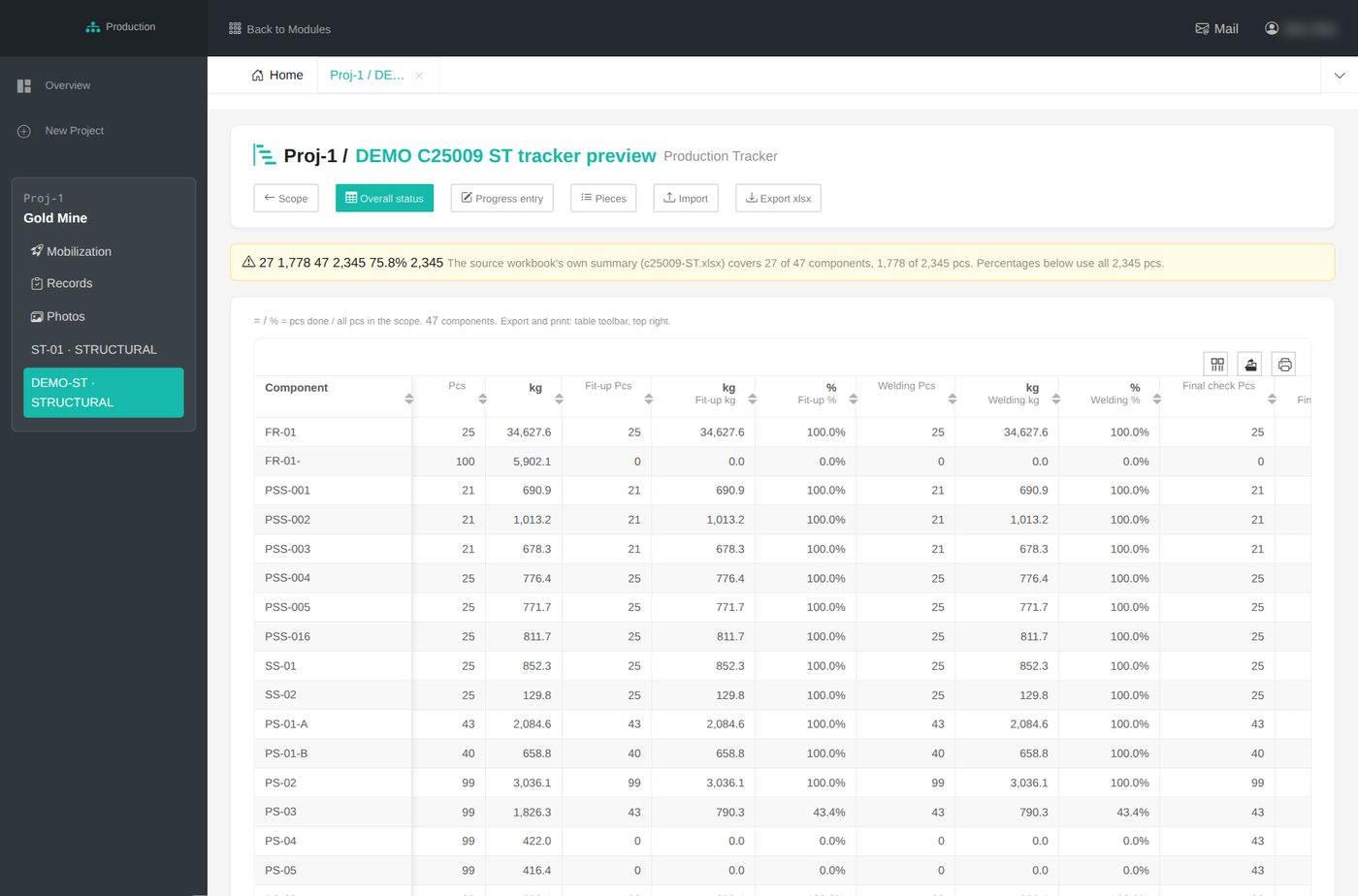
| Progress and weld inch tracking | Fit up, welding and final check recorded by piece and by kilogram, read from the shop's own workbooks rather than a percentage someone types in |
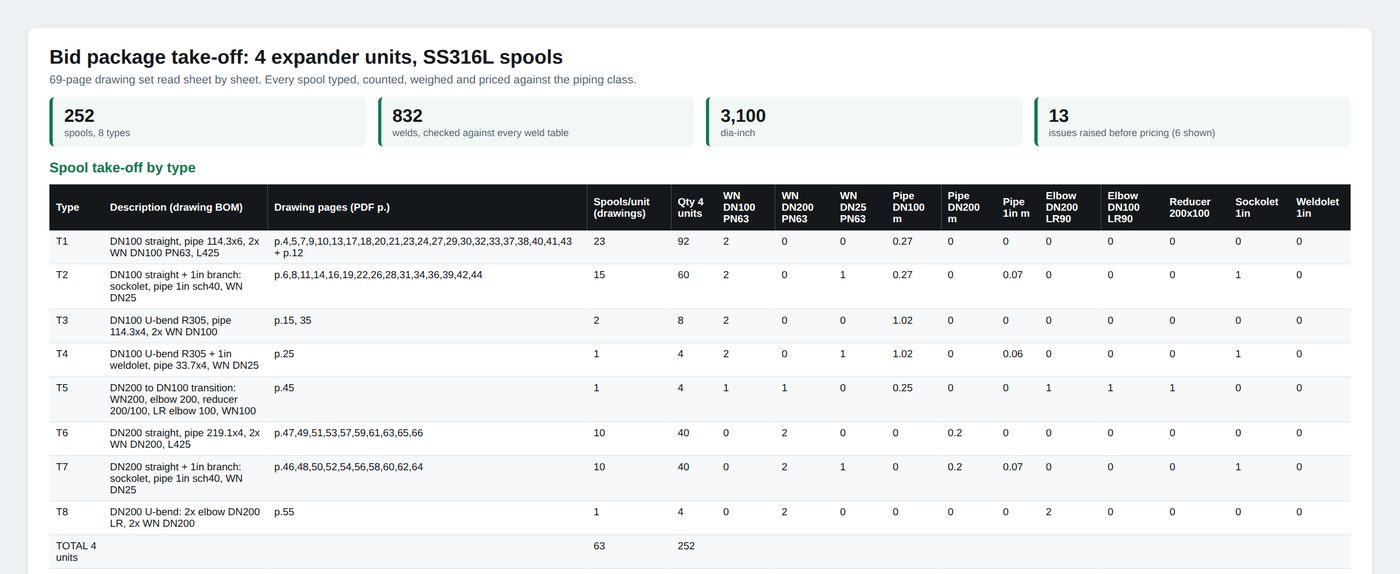
| Take off and quantities | Every sheet of the package read, spools and components counted, weighed and typed against the piping class, with conflicts raised before anyone prices them |
| NDE and inspection | Inspection results, hold point releases and repair rates tracked against the ITP as the work happens |
| Material traceability | Heat numbers, certificates and release notes tied to the piece, not filed separately and reconciled at the end |
| Documentation | A digital manufacturing record book that is built through the job and handed over complete, not assembled in the last week |
| Reporting | One progress picture across every hub, with the deadlines and the exceptions, in a brief you can forward |
Running systems, not screenshots of a demo
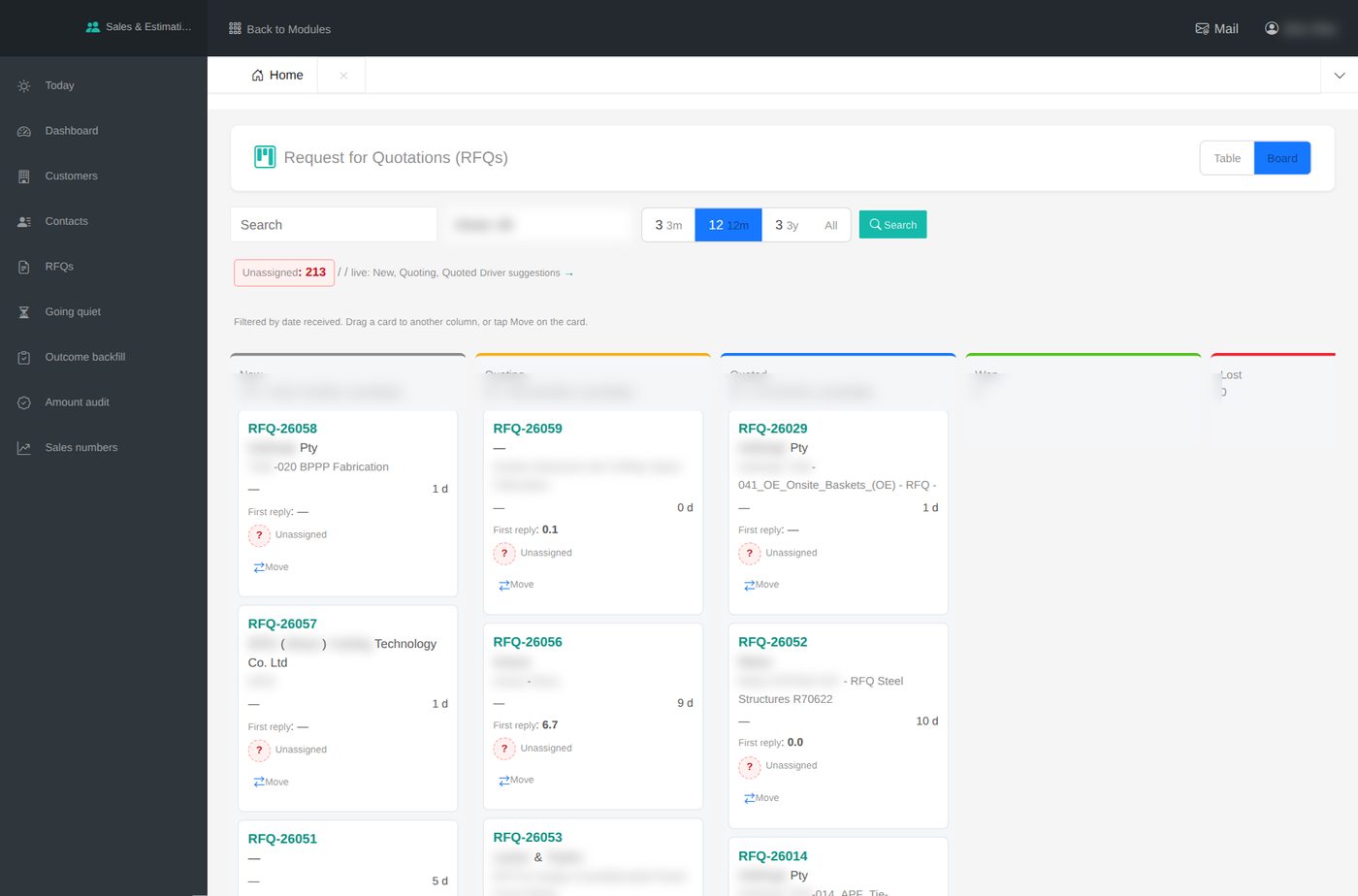
Three views from a working installation. Customer names and commercial figures are masked.
Why the numbers hold up
Figures come out of the workbooks the shop already keeps, so reporting does not depend on anyone writing a status email.
Percent complete is derived from pieces and kilograms through each gate, which is hard to flatter.
What is late, what failed inspection and what is waiting on a decision, ahead of what went fine.
Three hubs, one report. You do not reconcile three formats to find out where the program stands.
Ask for a sample progress report
We will show you what the weekly looks like on a live package, with the names taken out.